
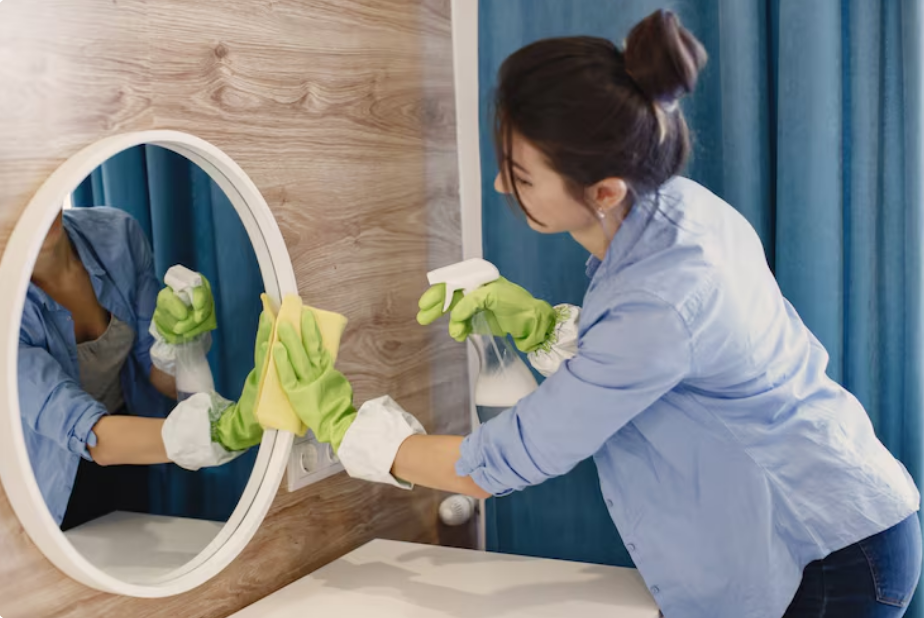
Some of the dirtiest spots in a home are not the ones that look messy. They are the places people touch without thinking: a handle opened during cooking, a switch used with damp hands, or a railing gripped several times a day.
These contact points collect skin oils, fingerprints, food traces, dust, and other everyday grime gradually. Because the buildup appears slowly, people often stop noticing it.
Giving high-contact surfaces occasional attention does not require another major cleaning session. It works better to notice where hands repeatedly land and deal with those spots as part of the room already being cleaned.
1. Door Handles and the Door Around Them
A door handle is only part of the contact zone.
People often push the door itself with fingertips, knuckles, or the side of a hand while reaching for the hardware. Over time, a darker patch may form around the handle even when the metal still looks clean.
Bedroom and closet doors may change slowly. Bathroom, pantry, and exterior doors usually show marks sooner because they are opened more frequently.
CJM Cleaning may find that the few inches surrounding a handle need more attention than the rest of the door, especially in busy rooms where the same contact pattern repeats every day.
Wipe according to the finish instead of automatically treating the entire door.
2. Light Switches and the Wall Beside Them
Switch plates often collect grime around their edges rather than directly in the center.
Fingers reach toward the same small section of wall again and again, particularly in hallways, kitchens, bathrooms, and children's rooms.
Look at the paint beside the plate as well as the switch itself.
Minimal moisture is best around electrical components, with cleaner placed on a cloth rather than sprayed toward the fixture.
If the wall mark remains after gentle cleaning, avoid aggressive rubbing that could change the paint finish.
The useful detail is the handprint pattern, not simply whether the switch plate looks dusty.
3. Refrigerator Handles During Meal Preparation
The refrigerator gets opened at moments when hands are often busy with food.
Someone may grab the handle after cutting vegetables, handling packaging, making a sandwich, or cleaning up a spill.
That contact can leave a mixture of fingerprints and kitchen residue.
Pay attention to the points where the handle connects to the door. Small creases around those mounts may collect grime even when the center of the grip is wiped regularly.
The surrounding appliance face may also show a narrow band of fingerprints.
Cleaning the exact contact zone is usually more useful than polishing the entire appliance every time.
4. Cabinet Pulls Near the Busiest Work Areas
Kitchen cabinets do not all receive equal hand contact.
The drawer holding utensils may be opened dozens of times in a week, while an upper cabinet containing occasional serving dishes may barely be touched.
Focus first on the pulls near the stove, sink, refrigerator, snack storage, and trash area.
Those spots often combine cooking film with oils from hands.
Look at the cabinet front immediately around the hardware too. Fingers frequently touch the door before gripping the pull.
This is why one cabinet may feel tacky even though the rest of the kitchen looks fine.
5. Remote Controls and Shared Controllers
Remote controls move between hands, sofa cushions, tables, and sometimes the floor.
They also tend to be used during snacks or meals, which adds crumbs and skin oils around the buttons.
Begin with loose debris.
A soft brush or dry cloth can remove what has collected between buttons before any lightly damp exterior wiping is considered.
Never saturate the device or spray cleaner directly onto it.
The same idea applies to game controllers and other handheld electronics: the narrow gaps around buttons and grips usually tell more about use than the broad plastic shell.
6. Stair Railings Where Hands Change Position
A railing does not become dirty evenly from end to end.
The sections near the top, bottom, and turns often receive the most pressure because people adjust their grip there.
Children may also touch lower parts of posts or balusters that adults rarely contact.
Run your hand lightly along the rail and notice whether one portion feels different from another.
That unevenness can guide where cleaning is actually needed.
Finished wood, painted railings, metal, and glass all respond differently, so the material should determine how the contact marks are handled.
7. Faucet Handles Before and After Handwashing
Faucet handles have an unusual contact cycle: they are touched once before hands are clean and often again afterward.
That makes them different from many other fixtures.
Soap, toothpaste, water spots, food traces, and skin oils can all collect around the handle and its base.
For cleaning services edison nj, the useful cleaning target is not simply the shiny top of the faucet but the full hand-contact zone around the control, including the narrow junction where moisture and residue tend to collect.
That small section can stay grimy even when the sink basin itself has just been cleaned.
8. Trash Lids, Pedals, and Built-In Bin Hardware
Trash areas are handled at moments when hands may already be messy.
A cabinet pull used for a hidden trash bin can collect food residue. Pedal bins gather grime near the lower front edge, while lid rims may be touched during bag changes.
Take a quick look whenever the liner is replaced.
If there are drips on the exterior, deal with them before they dry. Check the floor immediately beneath the bin as well, especially in kitchens where crumbs may fall during disposal.
The trash container does not need a detailed wash every time. Its contact points simply should not be ignored until something spills.
9. Phones, Keyboards, Mice, and Charging Areas
Electronics often receive more hand contact than furniture but less household cleaning.
Phones, tablets, computer mice, keyboards, and charging cables may be handled for hours each day.
Follow the manufacturer's cleaning instructions and keep moisture away from ports, openings, and sensitive coatings.
The surrounding desk or charging station also matters.
Cables trap dust. Small crumbs collect beside keyboards. Fingerprints build around docking areas.
The device and the few inches around it function as one high-use zone, so cleaning only the screen may leave the rest looking neglected.
Build Contact Points Into the Room You Are Already Cleaning
High-touch cleaning works best when it is attached to existing room care instead of treated as a separate whole-house project.
During kitchen cleaning, include the busiest refrigerator and cabinet handles. In the bathroom, notice the faucet controls and door hardware. While dusting a living room, deal with remotes and switches that show visible marks.
CJM Cleaning can also be directed toward the high-contact points that residents tend to miss between appointments rather than treating every handle in the home as though it receives the same use.
Actual contact should set the priority.
Clean Where Hands Really Land
A home can have clean floors and counters while still feeling slightly grimy if the places people touch all day are neglected.
Door handles, switch plates, appliance grips, cabinet pulls, remotes, railings, faucets, trash hardware, and electronics each collect a different mix of everyday residue.
The practical approach is to notice where hands repeatedly land, then include those spots when the surrounding room is already being cleaned.
That keeps small contact marks from building into sticky or visibly dull patches without turning them into another exhausting checklist.