
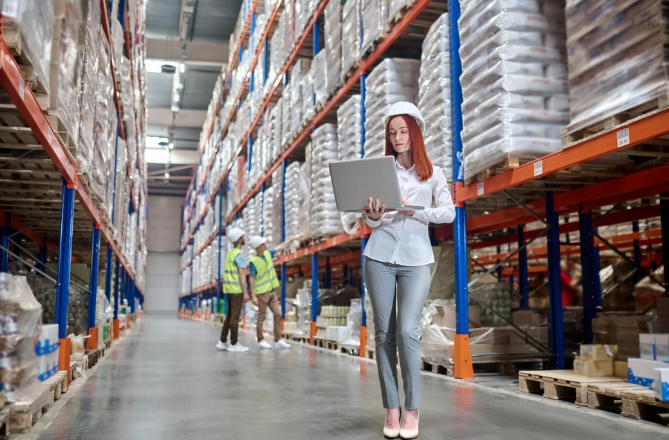
The pressure on Indian businesses to deliver faster, smarter, and at lower cost has never been greater. Walk into any boardroom conversation about operations today, and you will almost certainly hear two words repeated: integration and visibility. Companies that once managed their logistics and warehousing as separate functions are finding that this old approach simply does not hold up anymore. When your warehouse does not speak the same language as your logistics operation, you end up with delays, miscommunication, and costs that quietly bleed your margins dry. This is not a trend that snuck up on businesses overnight. It has been building steadily, and the organisations that saw it early are now operating with a clear competitive edge.
The Problem With Keeping Them Separate
For a long time, Indian businesses treated warehousing and logistics as two distinct problems to solve independently. You hired warehouse companies to store your goods and logistics companies to move them, and somewhere in between, you hoped the handoff would be smooth. More often than not, it was not. The core issue is that disconnected operations create friction at every touchpoint. Here is what businesses typically run into when these two functions are not aligned:
Inventory inaccuracies pile up when the team managing stock does not have real-time visibility into what is being dispatched or received.
Delayed order fulfilment becomes a recurring problem because logistics teams are working off information that is hours or even days behind.
Accountability gaps appear the moment something goes wrong, as each party points to the other, and resolution takes far too long.
Higher operational costs result from redundant processes, excess safety stock, and emergency dispatches that could have been avoided with better coordination.
None of these are new problems, but they are becoming less and less acceptable in a market where customers expect reliability as a baseline, not a bonus.
What Integration Actually Looks Like?
Integrated logistics and warehousing is not simply about hiring one company to do both jobs. It is about building a system where every movement of goods, whether inside a facility or on the road, is part of a single, connected operation. When this is done right, the impact is felt across the entire supply chain:
Unified Data and Visibility
A business can track its inventory in real time, from the moment goods arrive at a warehouse to the moment they reach the customer. There are no more blind spots or delayed updates between two disconnected systems.
Faster Turnaround Times
When the people managing storage and the people managing movement are working from the same playbook, delays caused by miscommunication simply stop happening. Orders move through the system faster because everyone is already on the same page.
Reduced Handling Errors
Fewer handoffs between separate teams mean fewer opportunities for things to go wrong. When one integrated team owns the process end to end, errors that typically fall through the cracks between vendors become far less common.
Scalability Without the Headache
An integrated partner can absorb volume spikes without the business having to renegotiate contracts with multiple vendors. Whether it is a seasonal surge or a sudden spike in demand, the operation adjusts without the usual scramble.
Better Cost Efficiency Over Time
When both functions are optimised together rather than independently, there is far less duplication of effort. The savings are not always visible immediately, but they compound steadily as the operation becomes leaner and more coordinated.
In practical terms, this means a business gets a warehouse that is designed with logistics in mind, and logistics operations that are planned around what is happening inside the warehouse. The two are not just coordinated; they are genuinely built around each other.
Why Are Indian Businesses Making the Shift Now?
India's supply chain landscape has matured significantly over the past decade. The rollout of GST simplified multi-state logistics and made it far more viable for companies to consolidate their warehousing footprint. Instead of maintaining small storage points in every state to manage tax implications, businesses began building fewer, larger, and better-equipped facilities in strategic locations.
This consolidation created a natural opening for integrated models to take hold. With larger warehouses serving wider geographies, the coordination between storage and movement became more critical than ever. Businesses realised that managing these two functions through separate vendors was creating more complexity, not less.
At the same time, Indian consumers and business buyers alike have grown far less tolerant of delays and fulfilment failures. The expectation of faster, more reliable delivery has pushed businesses to look at where the real bottlenecks in their supply chain sit. In most cases, the answer is somewhere in the gap between the warehouse and the logistics operation.
There is also the matter of technology. Modern warehouse management systems, fleet tracking tools, and route optimisation software are most powerful when they are connected. Logistics companies and warehouse companies that operate in silos (An isolated operational unit, technology system, or storage facility that works independently rather than as part of a connected supply chain network) are often running separate platforms that do not talk to each other, which means the data that should be driving smarter decisions is locked away in different corners of the operation.
Choosing the Right Partner for an Integrated Model
Not every provider is genuinely equipped to offer integration in the truest sense. Businesses evaluating their options should look beyond the pitch and ask harder questions about how the two functions are actually managed.
When choosing a partner, find out whether they own their warehouses or use rented space, how their systems connect stock data to delivery planning, how they manage busy periods, and whether one team handles both storage and logistics or two separate teams do. A partner who genuinely combines both functions will give you clear, specific answers rather than vague ones.
Conclusion
The shift towards integrated logistics and warehousing is not a passing phase. It reflects a genuine change in how Indian businesses think about their supply chains, moving away from a collection of independent vendors towards a cohesive operation with clear accountability and shared visibility.
For businesses ready to make that shift, the starting point is finding a partner who understands both sides of the equation. Varuna Group is one such name worth considering, bringing together logistics and warehousing expertise under one roof, built specifically for the demands of the Indian market.