
Sailors have named their vessels for as long as there have been vessels worth naming. A ship was never just a ship — it was "she," it had a temperament, and sailors who anthropomorphized their vessels weren't confused about wood and rope being alive. They were doing something more useful: building a working relationship with something they depended on, something that could kill them if the North Atlantic got a vote. The same instinct shows up everywhere humans hand a piece of their daily routine over to an object. We name hurricanes so we can talk about them coherently. We name cars, especially the temperamental ones. My grandfather's tractor had a name that would not print in a family newspaper.
That anthropomorphizing instinct predates smart speakers by a lot more than most people realize. In 1966, an MIT researcher named Joseph Weizenbaum built a simple program called ELIZA that reflected users' statements back as questions, using no real understanding of language at all. Weizenbaum later recounted being unsettled by how quickly people opened up to it, including his own secretary, who reportedly asked him to leave the room so she could keep talking to it privately, despite knowing exactly how the program worked. He hadn't given ELIZA a name with any personality behind it, and people supplied the rest anyway. That gap between what a system actually is and what people are willing to project onto it turns out to be the load-bearing wall under everything that came after, including a chatbot with an actual name and voice.
So when Amazon put a name on a smart speaker, or Apple gave its assistant a voice and the ability to make a joke about the weather, they weren't inventing a new behavior. They were routing an old behavior into new hardware.
The Assistant Era Made It Official
For more than a decade, "talking to your phone" has meant addressing something with a name, a fixed vocal identity, and a small set of personality quirks calibrated by a product team. Researchers who study human-computer interaction have spent a lot of that decade asking why this works as well as it does — why people say "please" to a speaker, or feel a flicker of guilt hanging up on one. Stanford's Institute for Human-Centered AI has published research on exactly this tendency, and the throughline is consistent: giving something a name and a consistent voice doesn't just make it easier to address, it changes how much people trust it and how long they're willing to keep talking to it. Naming isn't decoration. It's an interface, in the way voice or a chat window is an interface.
From a Single Name to a Full Person
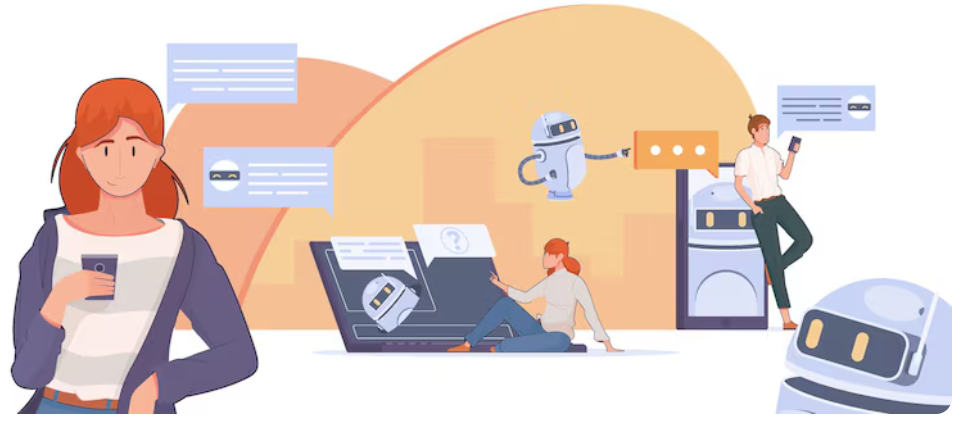
Companion apps are the place this trend has run the furthest. A smart speaker gets one name and a handful of stock responses. A companion character gets a backstory, a personality that stays consistent across weeks of conversation, opinions that don't contradict themselves, and — increasingly — a face and a voice the user had some hand in shaping. That's a much bigger anthropomorphic bet than a name for a kitchen timer, and it's worth asking why people are willing to make it.
Part of the answer is that the payoff scales with the investment. A named assistant that only sets timers doesn't need much personality to be useful. A companion meant for actual conversation — the kind of back-and-forth where continuity matters, where the other party is supposed to remember what you said last Tuesday — needs enough of a persona that the conversation doesn't feel like shouting into a form. Someone customizing a character on Bonza AI is doing a more elaborate version of what a sailor did patting the hull of his boat: building a name and a face around something whose actual mechanics are opaque, so that dealing with it daily feels less like operating a machine and more like company.
None of this requires anyone to be confused about what's on the other end. Adults using these platforms — and this is squarely 18+ territory, marketed and used as such — generally know they're talking to software. The naming instinct isn't a symptom of confusion. It's a coping mechanism for complexity, the same one that got sailors through storms with their wooden hulls intact.
Why the Instinct Won't Go Away
Every wave of new technology that asks for sustained daily attention eventually gets a name. It happened with ships, cars, and now it's happening with software built explicitly for conversation. The difference this time is that the "machine" can hold up its end of a conversation well enough that the name stops feeling like a nickname and starts feeling like an actual designation for an actual character — one who exists only in the software but behaves consistently enough to be addressed as more than a tool.
That shift matters most for people using these apps for company rather than utility, where the tacit understanding is that a well-drawn character can be a pleasant, low-stakes presence in someone's evening without pretending to substitute for the friends, partners, or family who show up in person. The naming is doing real psychological work either way — it's just doing more of it when the thing being named is designed to talk back.